
LOTTERY is a number-based game that relies on random outcomes, featuring colorful numbered balls, an easy-to-follow number board, and the excitement of waiting for each draw. In 2026, LOTTERY continues to attract people interested in number games because of its straightforward concept and accessible entertainment experience.
This comprehensive LOTTERY Game Guide for 2026 explores the game’s interface, basic mechanics, step-by-step instructions for beginners, cost and profit calculation tables, and essential tips for responsible play. The article is designed to help readers understand the game systematically, even if they have no previous experience.
Note: LOTTERY is a general term used for different lottery-style games. The illustrative image shows numbered balls displaying 59, 70, and 4 alongside a LOTTERY number board. However, the image alone does not establish the exact developer, official rules, payout rates, or mechanics of the specific version.
1. What Is LOTTERY? An Overview of the LOTTERY Game in 2026
LOTTERY generally refers to a number-based game in which participants select numbers or combinations and compare their selections with published results. Depending on the version, the game may feature traditional lottery draws, randomly generated numbers, or prediction-based rounds.
One of the main attractions of LOTTERY is its simplicity. Instead of learning complicated controls, beginners typically need to understand the number board, selection process, draw schedule, and conditions required to win.
The illustrated game features a bright yellow and orange color scheme, combined with large numbered balls and a number board in the background. This visual presentation creates an energetic atmosphere and makes the numbers easy to recognize.
Key Features of LOTTERY
- User-friendly interface: Numbered balls and a clear number board make results easier to follow.
- Beginner-friendly mechanics: Basic lottery-style games generally do not require advanced gaming skills.
- Random outcomes: Each draw can produce an unexpected result, but no number-selection method guarantees a win.
- Potential mobile compatibility: Compatible online versions may support smartphones, tablets, and desktop computers.
- An opportunity to learn probability: Players can explore mathematical probability, participation costs, and financial calculations through illustrative examples.
It is important to distinguish between traditional lotteries, electronic lotteries, and online number-prediction games. Although they all involve numbers, their rules and payout structures may be completely different.
2. LOTTERY Game Review: Graphics and User Experience
Visual Design
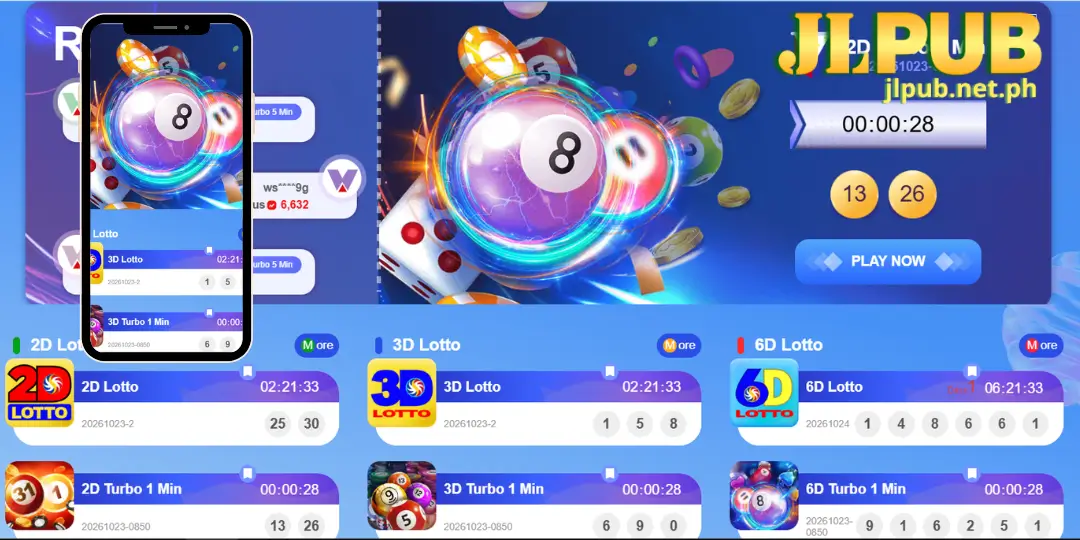
In the illustrative image, a large golden ball displaying the number 70 occupies the center of the screen. A red ball marked 59 and an orange ball marked 4 appear on either side, while additional balls and the LOTTERY number board create depth in the background.
The bright colors make the interface visually appealing. The large numbers also help users identify results quickly, particularly when viewing the game on a smartphone.
User Experience
For a number-based game, a good user experience depends on more than attractive graphics. Accurate information, clear rules, and accessible controls are equally important.
A LOTTERY version worth considering should ideally provide:
- Easily accessible game instructions.
- A clear results board and historical results for reference.
- Transparent information about odds, prizes, and winning conditions.
- An interface that adapts to different screen sizes.
- Clear privacy policies, security information, and customer support.
If essential information is hidden or difficult to locate, beginners should exercise caution before participating.
3. How to Play LOTTERY: A Complete Beginner’s Guide
The exact playing process depends on the version of LOTTERY you choose. However, beginners can follow these general steps to understand how many number-selection games operate.
Step 1: Understand the Rules
Start by reading the official instructions. Identify the available number range, the number of selections permitted per round, the draw schedule, and the conditions for winning.
For example, a hypothetical game might require players to select three numbers from a board containing 20 numbers. This is simply an educational example, not the confirmed rule set of the game shown in the image.
Step 2: Choose Your Playing Method
Some versions allow manual number selection, while others offer random selection. Different versions may require players to predict a single number, a pair of numbers, or a specific combination.
Make sure you understand the actual format supported by the game rather than assuming every LOTTERY version follows identical rules.
Step 3: Select Your Numbers
You may choose numbers according to personal preference or use a random-selection feature if one is available. Before confirming your selection, review the numbers, the number of selections, and any associated costs.
Do not assume that a number that appeared frequently in the past will continue appearing or that a number that has not appeared recently is automatically more likely to be drawn.
Step 4: Review the Cost
If the version involves real-money betting, identify the participation cost, maximum permitted amount, and any applicable fees. Only consider participating if you understand the terms and can afford to lose the entire amount.
Step 5: Wait for the Results
Once the round ends, compare your selected numbers with the officially published results. Review the winning conditions, payout calculations, and payment schedule if applicable.
Do not rely solely on promotional graphics or on-screen animations to determine whether a prize has actually been awarded.
Step 6: Record Your Results
Keep a record of your costs, amounts received, and remaining budget after each round. This helps you monitor your entertainment spending, although it does not improve the probability of winning future draws.
==>Read more : Sport Guide 2026
4. LOTTERY Calculation Table: Costs, Prizes, and Profit
A calculation table is particularly useful for beginners because it helps distinguish the total amount received from the actual profit.
The following table uses hypothetical amounts in Philippine pesos (PHP). These figures are for educational purposes only and do not represent the official betting amounts, payout rates, or prizes of any LOTTERY platform.
Example: Calculating Results Across Three Rounds
| Item | Round A | Round B | Round C |
|---|---|---|---|
| Participation cost | ₱10 | ₱20 | ₱15 |
| Total payout received | ₱0 | ₱50 | ₱10 |
| Net profit or loss | -₱10 | +₱30 | -₱5 |
How to Calculate Net Profit
Formula:
Net Profit = Total Amount Received − Total Participation Costs
Using the table above:
- Total participation costs: ₱10 + ₱20 + ₱15 = ₱45.
- Total amount received: ₱0 + ₱50 + ₱10 = ₱60.
- Net profit: ₱60 − ₱45 = ₱15.
In this hypothetical example, the final result is a profit of ₱15. However, this does not mean future rounds will produce a profit.
How to Calculate the Profit Percentage
Profit Percentage = (Net Profit ÷ Total Participation Costs) × 100%
Using the example:
₱15 ÷ ₱45 × 100% = 33.33%.
A positive result indicates a profit, while a negative result indicates a loss. If the payout already includes the original participation amount, subtract the participation cost only once to avoid incorrect calculations.
Example of a Responsible Entertainment Budget
| Budget Category | Illustrative Limit | Recommended Principle |
|---|---|---|
| Per-round budget | ₱10 | Do not increase it after a loss |
| Per-session budget | ₱30 | Stop when the limit is reached |
| Weekly budget | ₱100 | Never borrow money to participate |
| When the budget is exhausted | ₱0 remaining | Stop instead of chasing losses |
These figures are illustrative budgeting examples, not spending recommendations. You can also choose a zero-cost budget and use free gameplay exclusively.
5. Understanding LOTTERY Probability and Results
One of the most common misconceptions is that past results can reveal a guaranteed winning formula. In a fair, independently randomized game, previous outcomes do not determine the next result.
A Simple Probability Example
Imagine a hypothetical game with 10 equally likely numbers, where a player must select one number.
The probability of selecting one specific number correctly is:
1 ÷ 10 × 100% = 10%.
This is a basic mathematical example, not the confirmed probability of the LOTTERY game shown in the image.
If a game requires several numbers or a specific combination, the probability must be recalculated according to the total number of possible outcomes and the applicable winning conditions.
Should You Follow Hot and Cold Numbers?
Hot numbers are numbers that have appeared frequently in a particular historical dataset. Cold numbers are numbers that have appeared less frequently during the same observation period.
These categories can help describe historical results, but they do not automatically provide a reliable prediction method. In a fair game with independent random draws, previous appearances do not change the probability of a number appearing in the next draw.
Players should therefore be cautious about claims involving 100% accurate predictions, guaranteed winning formulas, or systems promising consistent profits.
6. Tips for a Safer LOTTERY Experience
To make the experience more manageable, prioritize transparency, realistic expectations, and personal control.
Start with free gameplay: If a free mode is available, use it to learn the interface and rules before considering any paid participation.
Set limits in advance: Establish a maximum amount of money and time for entertainment. Stop when you reach either limit.
Avoid chasing losses: Increasing your participation amount to recover previous losses can lead to greater financial harm. Treat each outcome independently.
Check payment terms: If prizes are available, read the eligibility requirements, transaction limits, fees, and withdrawal policies before using the service.
Protect your personal information: Never share your password, verification codes, or sensitive financial information with untrusted individuals. Avoid downloading applications from unknown sources.
Check local regulations: Only use services that comply with the laws and age requirements applicable where you live. Real-money gaming activities may be subject to specific legal restrictions.
Pay attention to your emotional well-being, too. If playing becomes stressful, affects your work, or leads to spending beyond your budget, take a break.
7. Exploring LOTTERY on an Online Platform
For people interested in exploring online lottery-style games, JLPUB App is a platform they can check to determine whether a compatible LOTTERY version or suitable trial mode is available.
Before using any service, independently verify the game’s availability, minimum age requirements, terms of use, privacy policy, and licensing status under the applicable regulations. A game appearing on a platform does not automatically establish that the service is licensed in every country.
If your goal is simply to understand how the game works, a free version that does not involve real-money participation can help you become familiar with the mechanics without creating financial risk.
8. Frequently Asked Questions About LOTTERY
Is LOTTERY Easy for Beginners?
Basic lottery-style games are generally easy to approach because the main actions involve selecting numbers and checking results. However, you should still read the rules of the specific version to understand its winning conditions.
Can You Play LOTTERY for Free?
That depends on the version and the platform. Some games offer free trial modes, while others may require purchasing a ticket or paying a participation fee.
Is There a Formula That Guarantees LOTTERY Wins?
No formula can guarantee a win in a fair game with random outcomes. Statistical analysis can describe historical data, but it cannot guarantee accurate predictions of future results.
How Do You Calculate LOTTERY Profit?
Subtract total participation costs from the total amount actually received. A positive result represents a profit, while a negative result represents a loss. Check whether the original participation amount is already included in the payout.
Where Should Beginners Start?
Begin by reading the rules, examining the number board, learning basic probability, and practicing in a free mode if available. You do not need to deposit money just to understand how a game operates.
9. Final Verdict: Is LOTTERY Worth Exploring in 2026?
LOTTERY stands out through its colorful numbered-ball theme, visually accessible interface, and relatively straightforward concept. For beginners, it can provide an opportunity to explore random numbers, probability, and result tracking.
However, the actual experience depends on the specific version, interface quality, transparency of the rules, and conditions of use. Attractive graphics and promotional claims are not substitutes for reliable information about probability, prizes, and legal compliance.
The best way to get started is to understand the rules, use calculation tables to monitor costs, prioritize free gameplay, and avoid treating LOTTERY as a reliable source of income.
Ultimately, a positive LOTTERY experience is not about winning every round. It is about understanding the game, maintaining realistic expectations, managing your budget, and knowing when to stop.
